


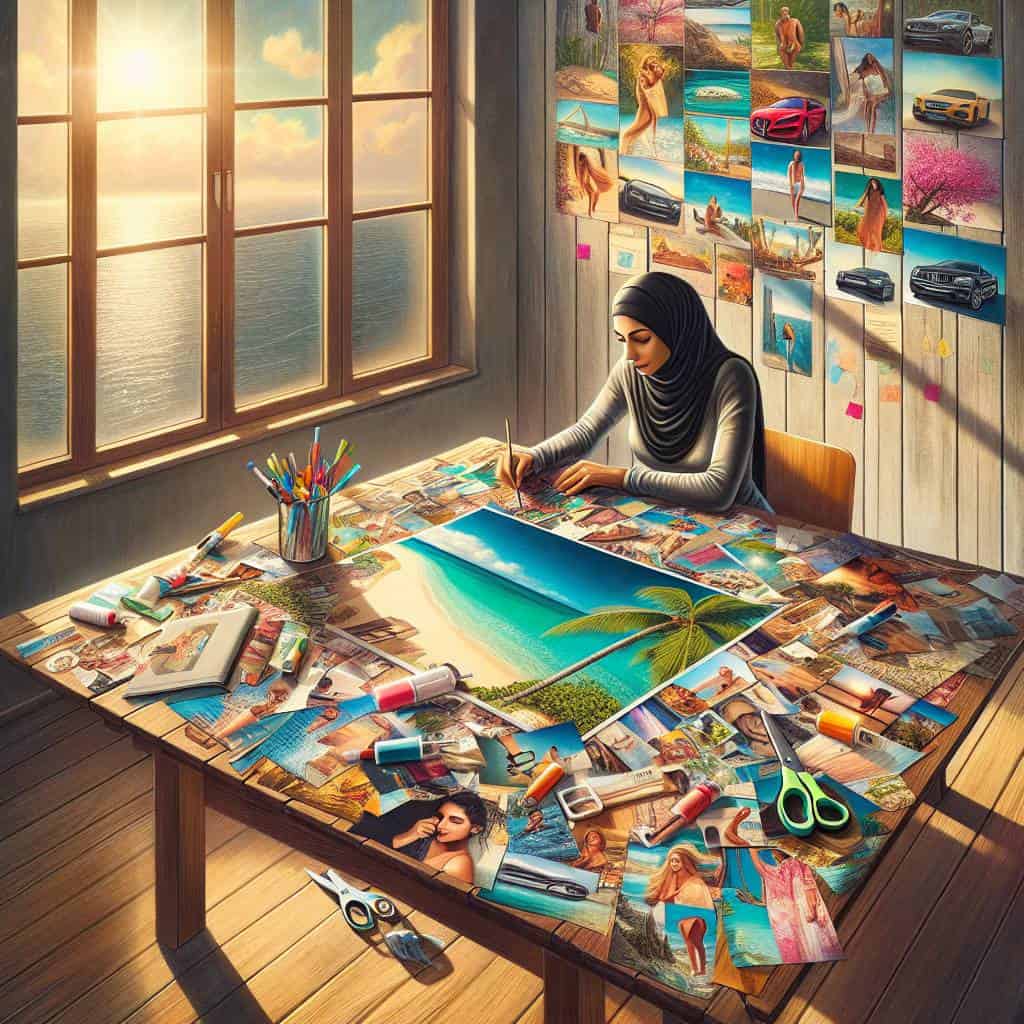
I remember the first time I slapped together a vision board. I was knee-deep in the madness of a New Year’s resolution—a tradition as reliable as a suburban mom’s yoga class. Armed with old magazines and a pair of scissors that barely cut, I embarked on what I thought was a transformative journey. Spoiler alert: it was about as transformative as watching paint dry. There I was, pasting pictures of tropical beaches and luxury cars, thinking I was conjuring some magic. But it turns out, those glossy pictures just stared back at me, mocking my naivety. I learned the hard way that a vision board is just a fancy collage unless you’re ready to back it up with actual grit and determination.
So, what can you expect from this article? Well, for starters, I’m not going to sell you on the mystical power of magazine cutouts. Instead, we’ll dive into what really makes a vision board work. Spoiler: it’s not the glue. I’ll share insights on how to harness visualization in a way that actually aligns with your goals, minus the fluff. This isn’t just about dreaming big; it’s about turning those dreams into something tangible. We’ll cut through the nonsense and get to the core of what makes a vision board more than just art and craft time. Stick around, and maybe, just maybe, we’ll figure out how to make those dreams a reality.
Table of Contents
How a Torn Magazine and a Glue Stick Became My Guide to the Universe
I remember the day I stumbled across an old stack of magazines and a rogue glue stick, relics from a forgotten junk drawer. There was nothing extraordinary about them—just glossy pages filled with the usual promises of a better life. But in that mundane mess lay the seed of something profound. As I ripped through those pages, I wasn’t just shredding paper; I was tearing through the superficial layers of my own indecision and doubt. Piece by piece, I started constructing a vision board that was as raw and unpolished as my own dreams. This wasn’t about manifesting some fairy-tale existence. It was about carving out a tangible guide to the universe I wanted to inhabit.
Every image I glued down wasn’t just a goal but a gritty reminder of what I needed to fight for. A picture of a mountain peak? That wasn’t just a symbol of success; it was a call to action, a challenge to push my limits. An old car ad? More than just a vehicle—it was freedom, a reminder that I could steer my own life. This wasn’t a passive exercise in wishful thinking. It was a deliberate act of visualization, a way to anchor my goals in something real. I crafted a map, a guide that worked not because it promised some mystical alignment with the cosmos, but because it forced me to confront my ambitions head-on, no frills, no fluff.
The Unseen Truths of Visualization
A vision board is nothing more than a glorified paperweight if you don’t pair it with raw grit and relentless action.
When Dreams Get Real
In the end, my vision board wasn’t just some arts-and-crafts project masquerading as a life strategy. It was a mirror, showing me the gritty reality of my ambitions and the steep climb ahead. It forced me to confront the raw fabric of my dreams—tattered but genuine, demanding more than just paper and glue to come alive. Every image slapped onto that board was a call to action, a reminder that visualization without the sweat of real effort is just a pretty lie we tell ourselves.
But here’s the beauty of it: once I accepted that my guide to the universe was more roadmap than magic spell, things started to shift. Goals became less about what I wanted and more about who I needed to become. The board, no longer a passive shrine to wishful thinking, turned into a battlefield plan—messy, imperfect, but mine. And in that chaotic collage, I found my path, not paved with certainty but with the raw potential of what could be if I dared to step off the edge and make it happen.