



I remember the first time I heard someone talk about “the future of work.” I was sipping a lukewarm latte at my local café, pretending to draft a blog post, but really just eavesdropping on the table next to me. A group of suits—probably consultants, or worse, tech evangelists—were waxing poetic about how AI would revolutionize the workplace. I almost choked on my drink. These folks talked like they were heralding in a new age of enlightenment, but all I could see were more people out of jobs and wondering how to pay the bills. The truth? The future of work isn’t some glowing horizon. It’s a minefield, and we’re all just trying to avoid stepping on the wrong square.
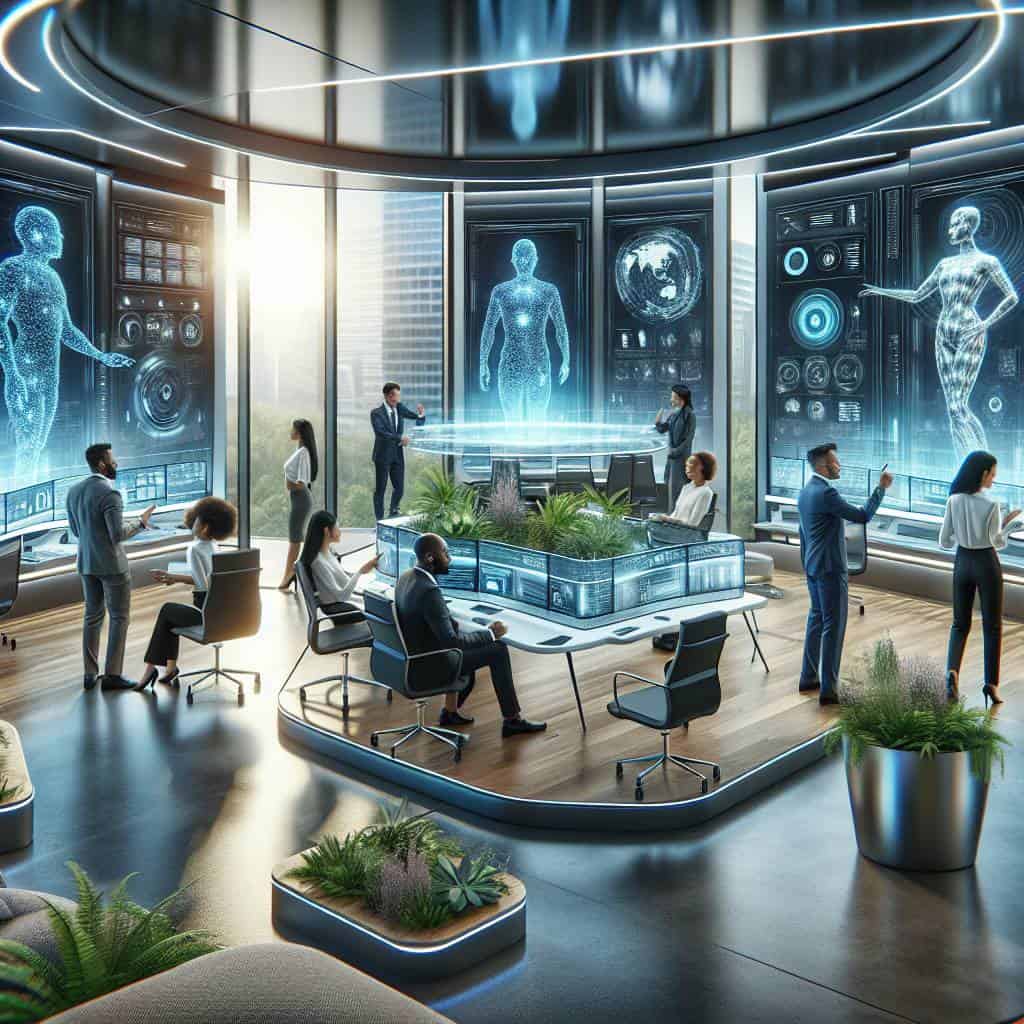
So, what can you expect from this article? I’m not here to sell you dreams or paint a rosy picture of robots doing your dirty laundry. No, we’re diving deep into the nitty-gritty: AI, automation, and all those fancy buzzwords that are shaping tomorrow’s job landscape. I’ll lay out the trends, the cold hard analysis, and the stark reality of what’s coming. Consider this your no-nonsense guide to navigating the future of work—a future that might just make you rethink everything you thought you knew about job security and career paths.
Table of Contents
How My Coffee Addiction Led Me to an Existential Crisis About AI and Automation
There I was, standing in line at my local coffee shop, clutching my reusable cup like it was the only thing keeping me tethered to reality. The barista, usually a cheery human beacon, had been replaced by a sleek, shiny contraption that hissed and steamed with mechanical precision. I watched as it perfectly brewed my double-shot espresso, and for a moment, I was awed. But then it hit me. If a machine could replace the friendly face that used to hand me my morning lifeline, what else was at risk? My mind spiraled into a rabbit hole of contemplation about AI and automation—those buzzwords we toss around without fully grasping their implications. The future of work? More like the future of “do I even have a job?
It’s not just about coffee—it’s about everything. We’re living in a world where algorithms can write code, diagnose illnesses, and yes, make your morning joe. The reassuring predictability of a 9-to-5 job is crumbling. We have to face the harsh reality: AI and automation are not just tools; they are competitors. And they’re coming for jobs under the guise of efficiency and progress. But at what cost? Sure, machines don’t call in sick or demand overtime, but they also don’t engage in the small, meaningful interactions that make us human. As companies race to adopt these technologies, I can’t help but wonder if we’re bartering away our souls for a bit of short-term convenience.
So there I stood, sipping my existential crisis in a cup. The coffee was perfect, but the experience tasted bitter. The future of work isn’t just about adapting to new technologies—it’s about redefining what it means to work, live, and connect in a world increasingly dominated by machines. Do we adapt and evolve, or do we become relics of a bygone era, replaced by the very technologies we once embraced? This is the question we need to confront, before the last of our “secure” jobs vanishes like steam from an espresso machine.
The Unseen Revolution
In a world where AI doesn’t just change the rules but rewrites the entire playbook, the future of work isn’t a distant concept—it’s the storm already raging around us.
The Future’s Echo: My Unfinished Conversation with Tomorrow
As I sit here, typing these final words, I can’t help but feel a bit like a reluctant time traveler. AI and automation aren’t just buzzwords floating in a tech conference ether; they’re the very forces reshaping our Monday mornings and stealing our mundane comforts. I once thought of my job as a constant, like that ever-reliable cup of coffee. But now, it seems more like a fleeting mirage, slipping away with each algorithm update. It’s a strange brew of anxiety and curiosity that keeps me awake at night—wondering what part of my world will be swept up next in this relentless tide of progress.
But let’s be real. We can’t just wait around for the future to define us. I refuse to be a passive observer as the dynamics of work morph into something unrecognizable. This isn’t some sci-fi movie where we watch the credits roll and go home. No, this is our wake-up call to grab the wheel and steer. Maybe we won’t have all the answers or even fully understand the questions we’re asking. Yet, this journey is just as much about the unknown as it is about the known. And that, my friends, is where the true adventure lies.